


Listening to Wampanoag Voices: Beyond 1620

Listening to Wampanoag Voices: Beyond 1620
"In 2020, the year that marks four centuries since the voyage of the Mayflower, the anniversary is being commemorated internationally for establishing the first colony that would be the foothold of New England. But a point too often lost or undersold is that colonization does not occur without people being colonized, subjugated, oppressed, even killed to accommodate the colonizer. Colonization happened to, not for, the Wampanoag.
But we have endured.
In this online exhibit, the Peabody Museum is giving us the opportunity to illustrate that point by lending contemporary Wampanoag voices to objects that were made, held, worn, consumed and otherwise made useful by our ancestors generations, if not centuries ago. These words attest to the significance of the objects and our continued relevance to them.
We are still here to acknowledge them, learn from them, talk about them, and give gratitude to the creator for them."
Four hundred years have passed since the Wampanoag Nation encountered English immigrants who settled on the shores of their land at Patuxet—now called Plymouth. Harvard University has had a relationship with the Wampanoag and other local tribal communities for nearly as long, establishing the Indian College on the Harvard campus in 1655. In 1650, the charter of Harvard College dedicated the institution to the education of Native American and English students to become Puritan ministers; in 1655, the Indian College was built on Harvard's campus to house students and to achieve those goals. Wampanoag tribal member, Caleb Cheeshahteaumuck, Class of 1665, was the first Native American to graduate from Harvard College.

In acknowledgment of this early history, the Peabody Museum has asked Wampanoag tribal members to reflect on collections spanning the seventeenth to twentieth centuries and stewarded by the Peabody Museum. Listen in as they share memories, thoughts, and reflections about collection items made by their ancestors and relatives and learn how Wampanoag life and culture continues to flourish today.
Listen to the HMSC Connects! Podcast episode entitled Wampanoag Perspectives.

Voices
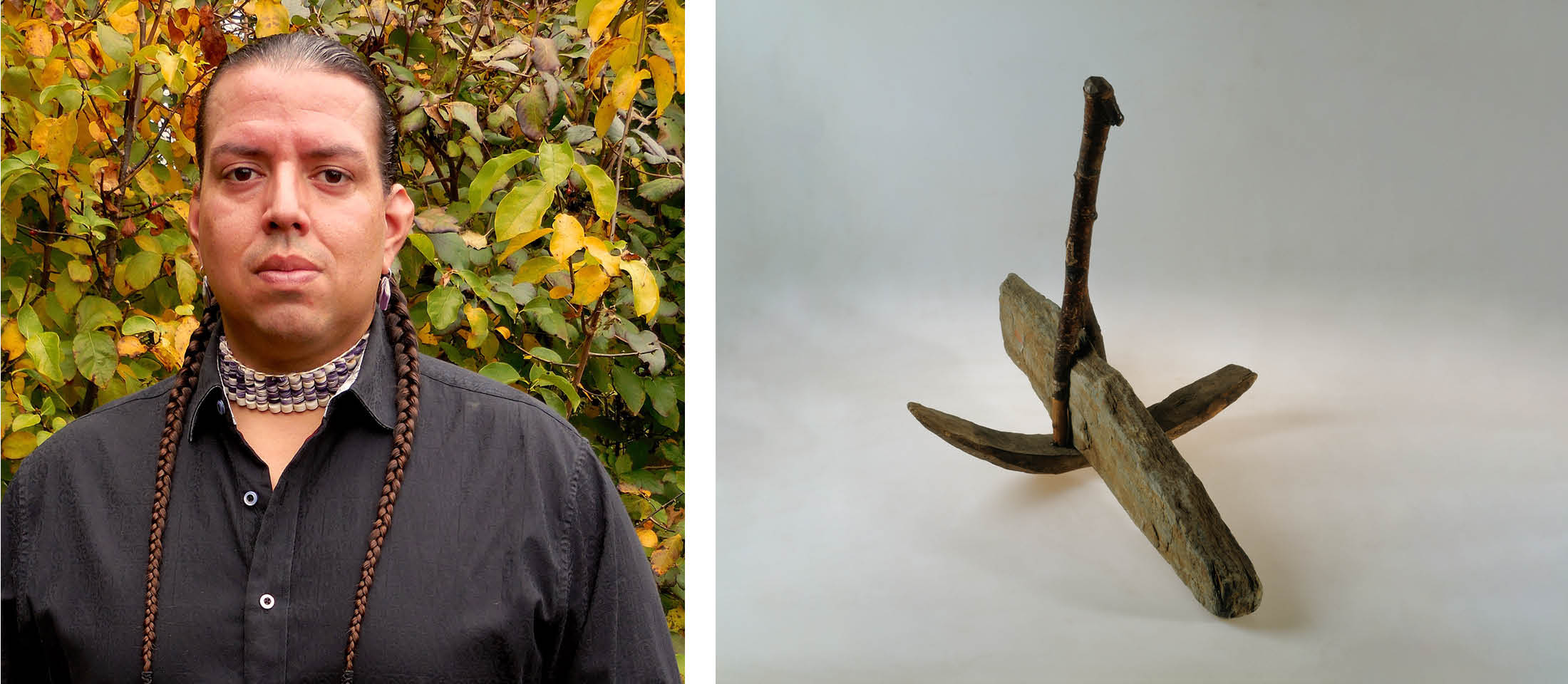
"Anchors are very important in our culture because we are seafaring people..."
—Jonathan James-Perry, Wampanoag Tribe of Gay Head (Aquinnah)
Listen on YouTube (3:22)
Read the transcript
Jonathan James-Perry is an Aquinnah Wampanoag culture bearer, leader, historian, artist and professional speaker. He is grounded in the traditions of his ocean-going ancestors. His material work embodies the refined quality of that of his ancestors, while still drawing upon his experience in a contemporary society. Jonathan’s pieces reflect balance within the Natural World, incorporating stories, effigies, and symbology of Wampanoag traditions. He is currently serving his fifth three-year term as Councilman for the Wampanoag Tribe of Gay Head (Aquinnah). Jonathan works diligently to enforce and uphold the sovereignty of his tribal nation as well as to maintain cultural continuance among his tribal citizens. He has over fifteen years of experience working within the Tribal Historic Preservation Office, with the responsibility of protecting and preserving cultural sites of significance throughout southern New England. He currently works for the Elders Council at the Mashantucket Pequot Tribal Nation to ensure cultural continuity and preservation within the community. Jonathan has over twenty years of experience in the research and historical interpretation of Eastern Woodlands Native culture and art. He has worked with various nonprofit and tribal organizations in exhibit design and cultural consultation based on traditional Wampanoag knowledge, symbolism, and values. Jonathan was most recently awarded the 2017 First People’s Fund Jennifer Easton Community Spirit Award for his work in reviving Wampanoag maritime traditions.
Killock. Gift of Dr. Lombard C. Jones, 1925. © President and Fellows of Harvard College, Peabody Museum of Archaeology & Ethnology, 25-16-10/98182
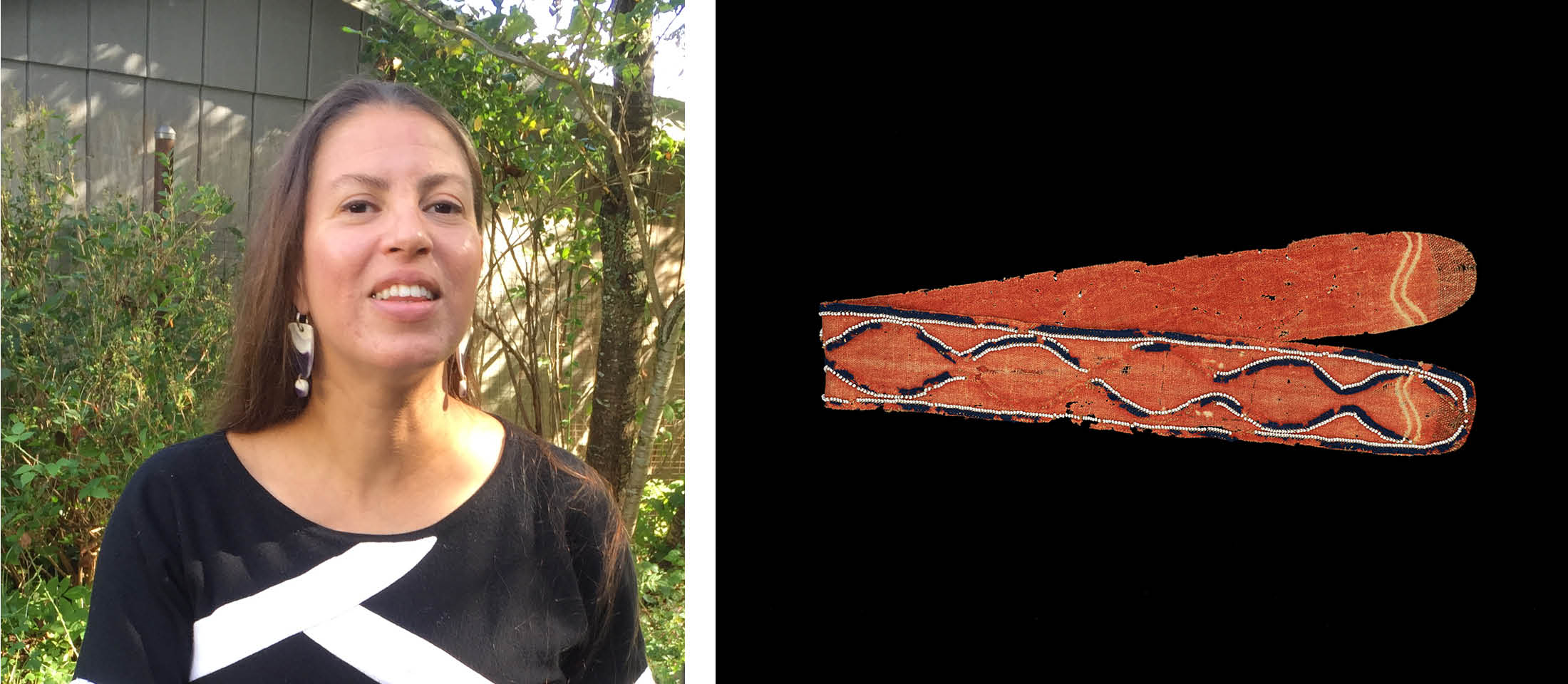
"The sash has a story to tell. The sash has taught me different lessons."
—Elizabeth James-Perry, Wampanoag Tribe of Gay Head (Aquinnah)
Listen on YouTube (5:10)
Read the transcript
Elizabeth James-Perry is an enrolled member of the Aquinnah Wampanoag Tribe on the island of Noepe (Martha's Vineyard). Her fine artwork focuses on Northeastern Woodlands Algonquian artistic expressions: wampum shell carving and diplomacy, sustainable weaving, and natural dyeing methods. As a member of a Nation that has long lived on and harvested the sea, Elizabeth’s is a perspective that combines art and an appreciation for Native storytelling and traditional environmental knowledge in her ways of relating to coastal North Atlantic life. With a degree in marine science from the University of Massachusetts, Dartmouth 2001, she also has offshore commercial-fisheries research experience. Elizabeth spent a decade employed in her tribe’s Historic Preservation Office. She was honored to be onboard the 38th voyage of the historic Charles W. Morgan whaling vessel as a descendant of Gay Head crewmembers. Her work has appeared in Native People’s Magazine, Native Fashion Now, and First American Art magazine. She is a recipient of the 2014 Massachusetts Cultural Council Traditional Arts Fellowship. Elizabeth resides in South Coast, Massachusetts where she works as an artist, speaker, and exhibit consultant.
Wool sash ornamented with beads. Gift of the American Antiquarian Society, 1890 © President and Fellows of Harvard College, Peabody Museum of Archaeology & Ethnology, 90-17-10/49333
Related Podcast Episode
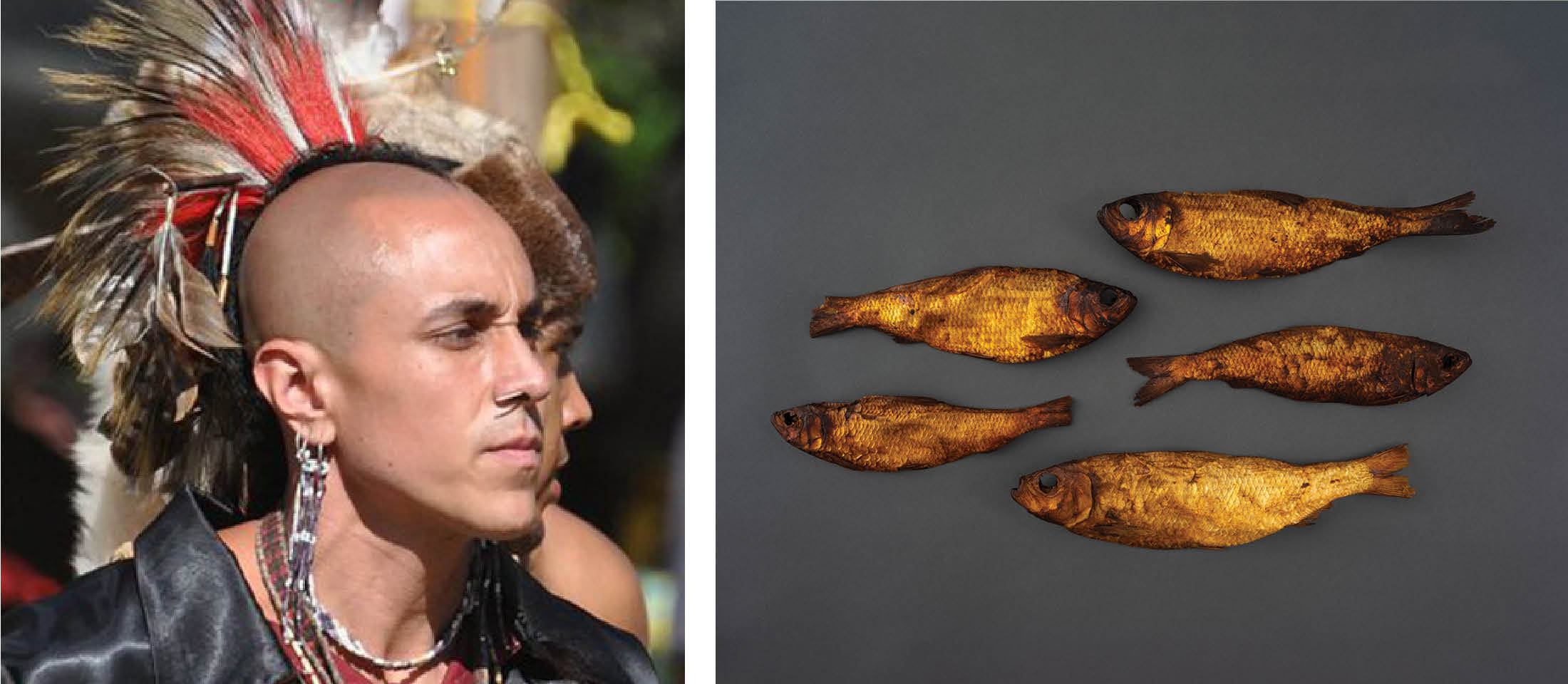
"You still hear folks around town asking each other, "You see the herring run yet?'"
—Phillip Wynne, Mashpee Wampanoag Tribe of Cape Cod (Otter Clan)
Listen on YouTube (3:23)
Read the transcript
"My name is Phillip Wynne; I am a traditional artist, educator, and historian from the Mashpee Wampanoag Tribe of Cape Cod (Otter Clan). For over a decade I served as a public historian with Plimoth Plantation’s Wampanoag Indigenous Program and five years as the Lead Native Museum Educator of Education & Outreach. Through research and the shared knowledge of our elders, I have learned to promote cultural continuity of our ancestral lifeways through practicing traditional skillsets. I currently work as a teacher assistant at our Nation’s language/cultural immersion school for lower elementary on the Mashpee Wampanoag Reservation."
Phillip Wynne photo (detail) by David L. Gray; Dried and partly smoked herring. Gift of Robert Kornfeld, 1939. © President and Fellows of Harvard College, Peabody Museum of Archaeology & Ethnology, 39-42-10/18404
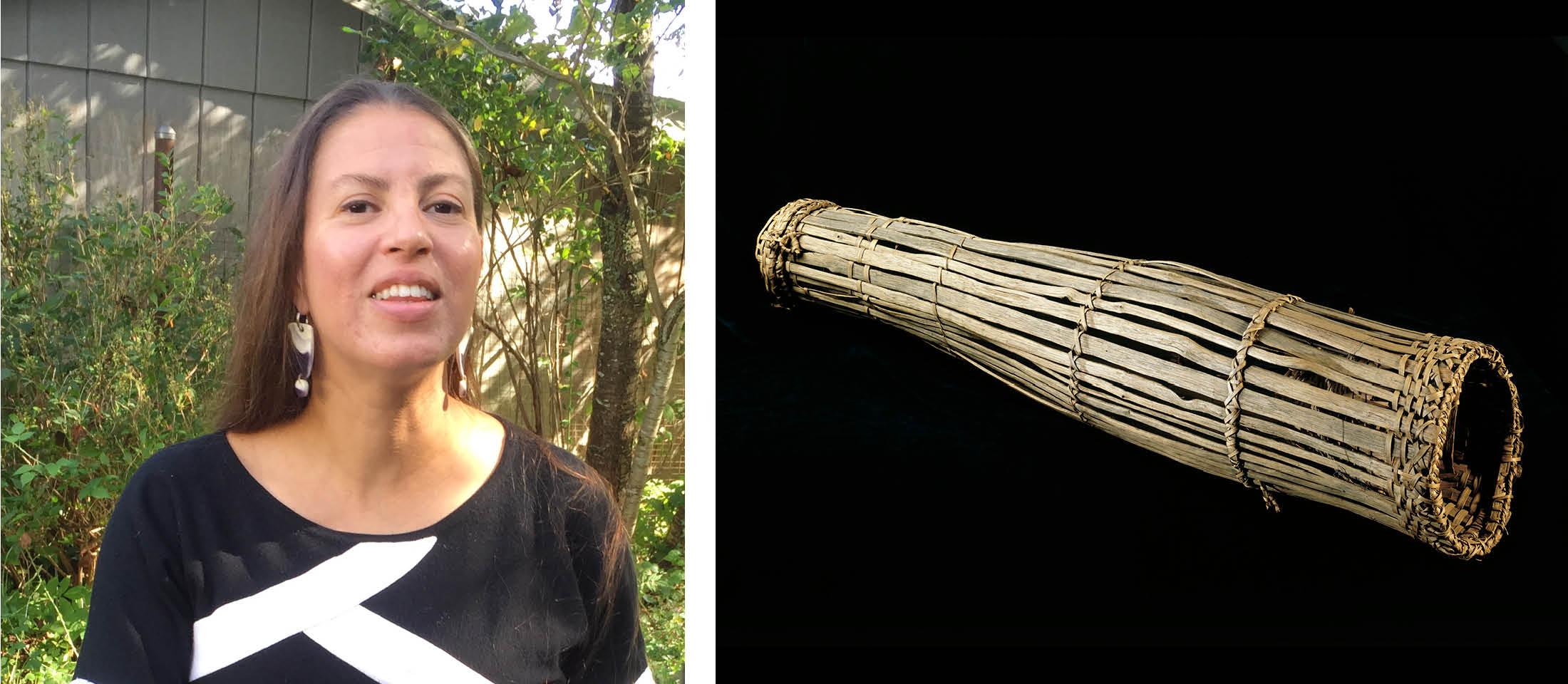
"We're still by the same waters our ancestors lived on. We still harvest a lot of fish on seasonal fish like herring, eels, shad."
—Elizabeth James-Perry (Aquinnah Wampanoag)
Listen on YouTube (3:25)
Read the transcript
Elizabeth James-Perry is an enrolled member of the Aquinnah Wampanoag Tribe on the island of Noepe (Martha's Vineyard). Her fine artwork focuses on Northeastern Woodlands Algonquian artistic expressions: wampum shell carving and diplomacy, sustainable weaving, and natural dyeing methods. As a member of a Nation that has long lived on and harvested the sea, Elizabeth’s is a perspective that combines art and an appreciation for Native storytelling and traditional environmental knowledge in her ways of relating to coastal North Atlantic life. With a degree in Marine Science from the University of Massachusetts, Dartmouth 2001, she has offshore commercial fisheries research experience. Elizabeth spent a decade employed in her tribe’s Historic Preservation Office. She was honored to be a 38th Voyager onboard the historic Charles W. Morgan whaling vessel, as a descendant of Gay Head crewmembers. Her work has appeared in Native People’s Magazine, Native Fashion Now, and First American Art magazine. She was a recipient of the Massachusetts Cultural Councils 2014 Traditional Arts Fellowship from Massachusetts Cultural Council. Elizabeth resides in South Coast Massachusetts where she works as an artist, speaker, and exhibit consultant.
Related Podcast Episode
Eel trap. Gift of Dr. Lombard C. Jones, 1917. © President and Fellows of Harvard College, Peabody Museum of Archaeology & Ethnology, 17-16-10/87069
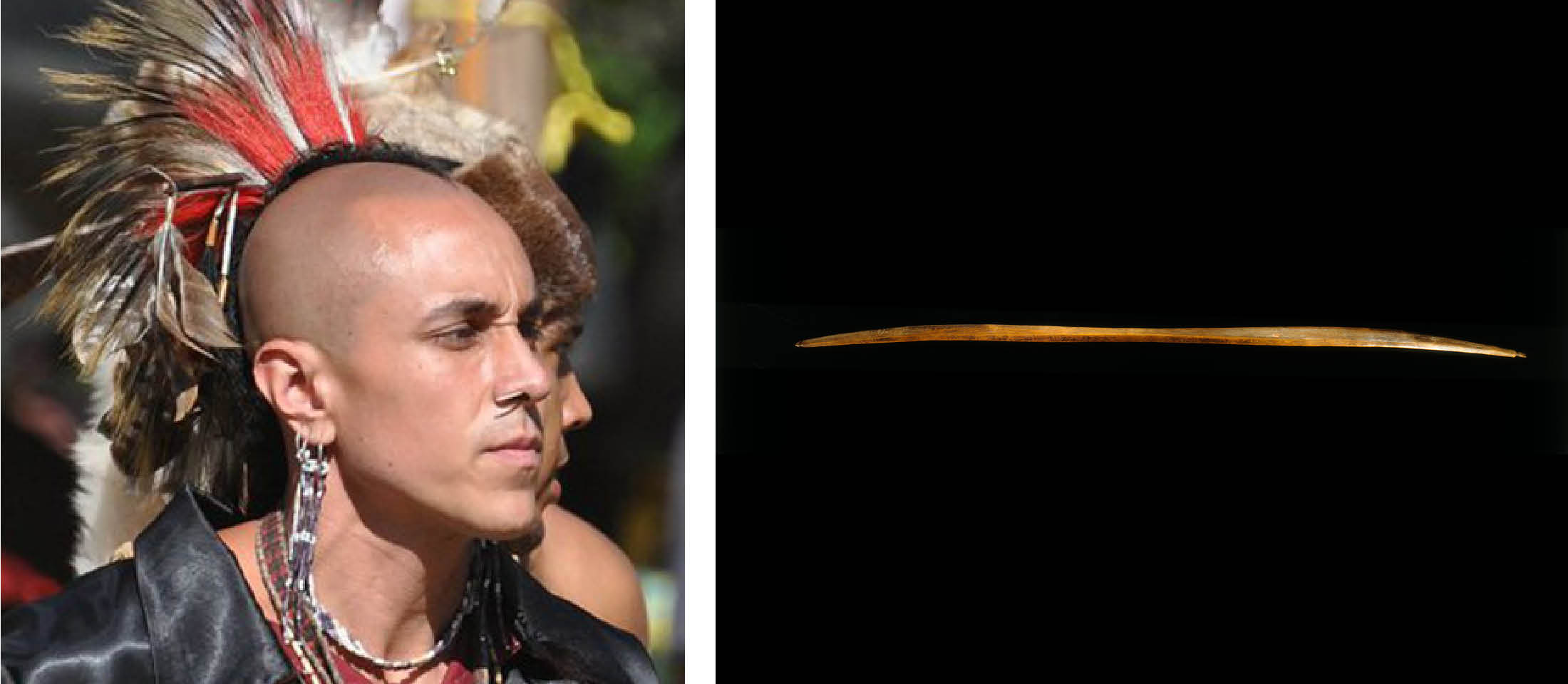
"The bow is taken from an Indian. Well, reading things like that my whole life I, of course always asked myself, 'Well, who was that Indian? What tribe did he come from? Was he Wampanoag?'"
—Phillip Wynne, Mashpee Wampanoag Tribe of Cape Cod (Otter Clan)
Listen on YouTube (2:45)
Read the transcript
"My name is Phillip Wynne; I am a traditional artist, educator, and historian from the Mashpee Wampanoag Tribe of Cape Cod (Otter Clan). For over a decade I served as a public historian with Plimoth Plantation’s Wampanoag Indigenous Program and five years as the Lead Native Museum Educator of Education & Outreach. Through research and the shared knowledge of our elders, I have learned to promote cultural continuity of our ancestral lifeways through practicing traditional skillsets. I currently work as a teacher assistant at our Nation’s language/cultural immersion school for lower elementary on the Mashpee Wampanoag Reservation."
—Phillip Wynne, Mashpee Wampanoag Tribe of Cape Cod (Otter Clan)
The Sudbury bow. Gift of the American Antiquarian Society, 1895. © President and Fellows of Harvard College, Peabody Museum of Archaeology & Ethnology, PM 95-20-10/49340; Phillip Wynne photo (detail) by David L. Gray.
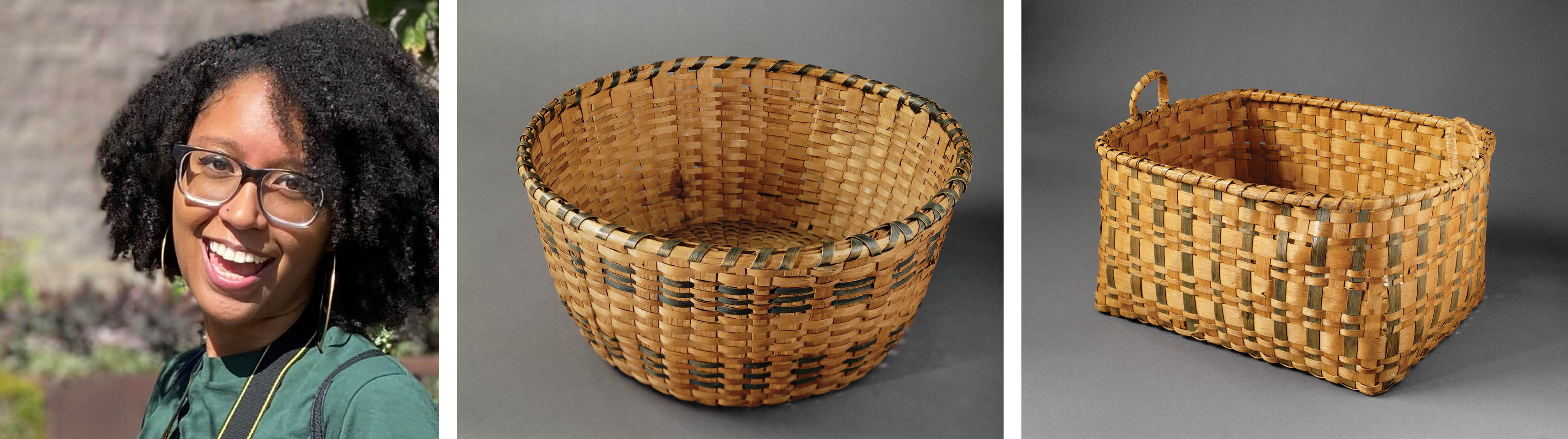
"...that these baskets are over one hundred years old really speaks to the craftsmanship."
—Zoë Harris (Mashpee Wampanoag Tribe)
Listen on YouTube (1:44)
Read the transcript
Zoë Harris is a member of the Mashpee Wampanoag Tribe who has lived on Cape Cod for most of her life. She currently lives in Boston and is pursuing her Master of Science in Public Health at Northeastern University. Zoë has been actively involved with her tribe’s language project and has worked with Wampanoag youth for many years.
Splint baskets. Gift of Dr. Lombard C. Jones, 1904. ©President and Fellows of Harvard College, Peabody Museum of Archaeology & Ethnology, 04-37-10/63616 (left) and 04-37-10/63618 (right).
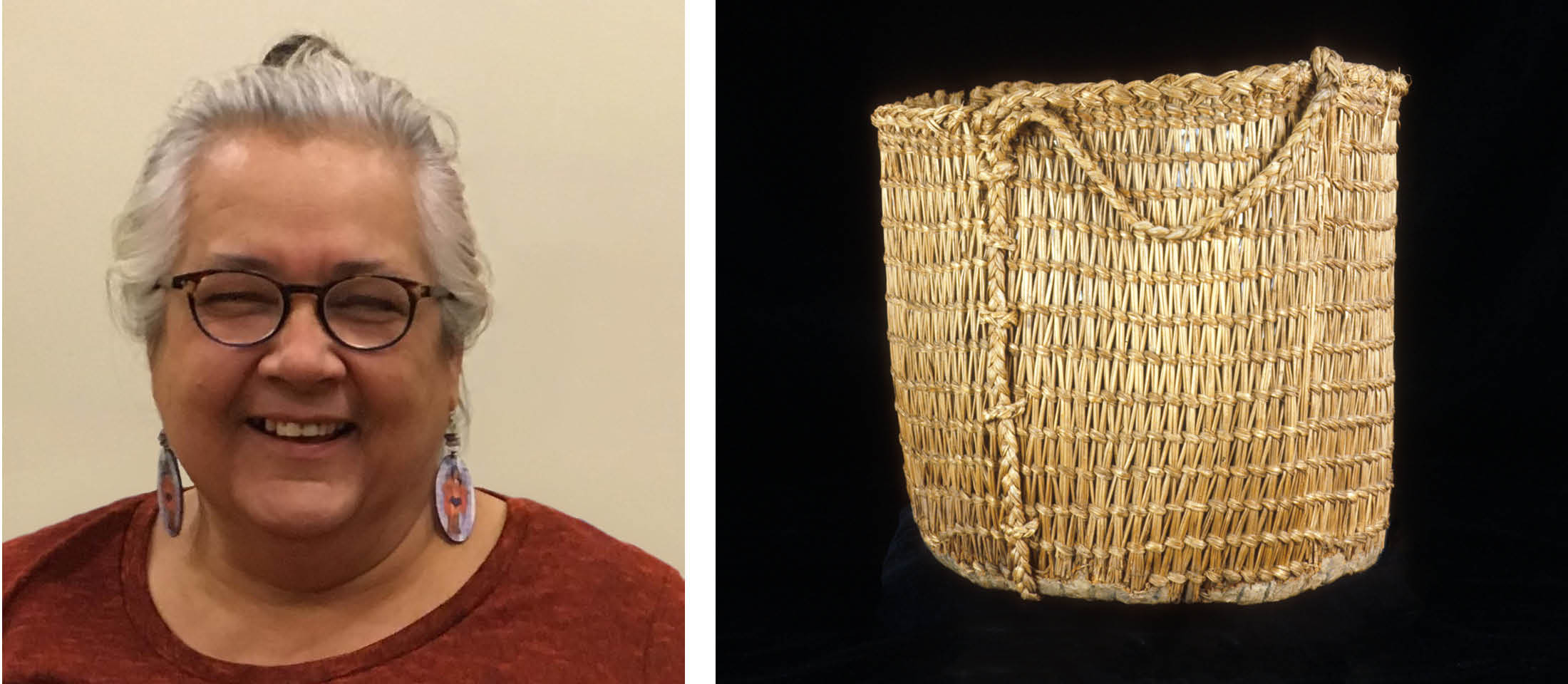
"[This grass pack basket] was made by Bathsheba Occouch of Gay Head in the nineteenth century, Gay Head now being called Aquinnah."
—Linda Jeffers Coombs, Wampanoag Tribe of Gay Head (Aquinnah)
Listen on YouTube (3:08)
Read the transcript
"I am a member of the Aquinnah Wampanoag tribe on Martha's Vineyard, and have lived in Mashpee for more than forty years. My two grandchildren are enrolled with the Mashpee Wampanoag tribe, as was their father and grandfather.
I have worked for forty-five years as a museum educator, spent eleven years at the Boston Children's Museum, thirty years in the Wampanoag Indigenous Program at Plimoth Plantation, and nine years at the Aquinnah Cultural Center, a small house museum regarding the Aquinnah Wampanoag. I have been an interpreter, an artisan, a researcher, led workshops and teacher institutes, written children's stories and articles on various aspects of Wampanoag history and culture, and developed and worked on all aspects of a wide variety of exhibits."
—Linda Jeffers Coombs, Wampanoag Tribe of Gay Head (Aquinnah)
Grass pack basket. Museum Purchase, Huntington Frothingham Wolcott Fund, 1932. © President and Fellows of Harvard College, Peabody Museum of Archaeology & Ethnology, 32-79-10/K156
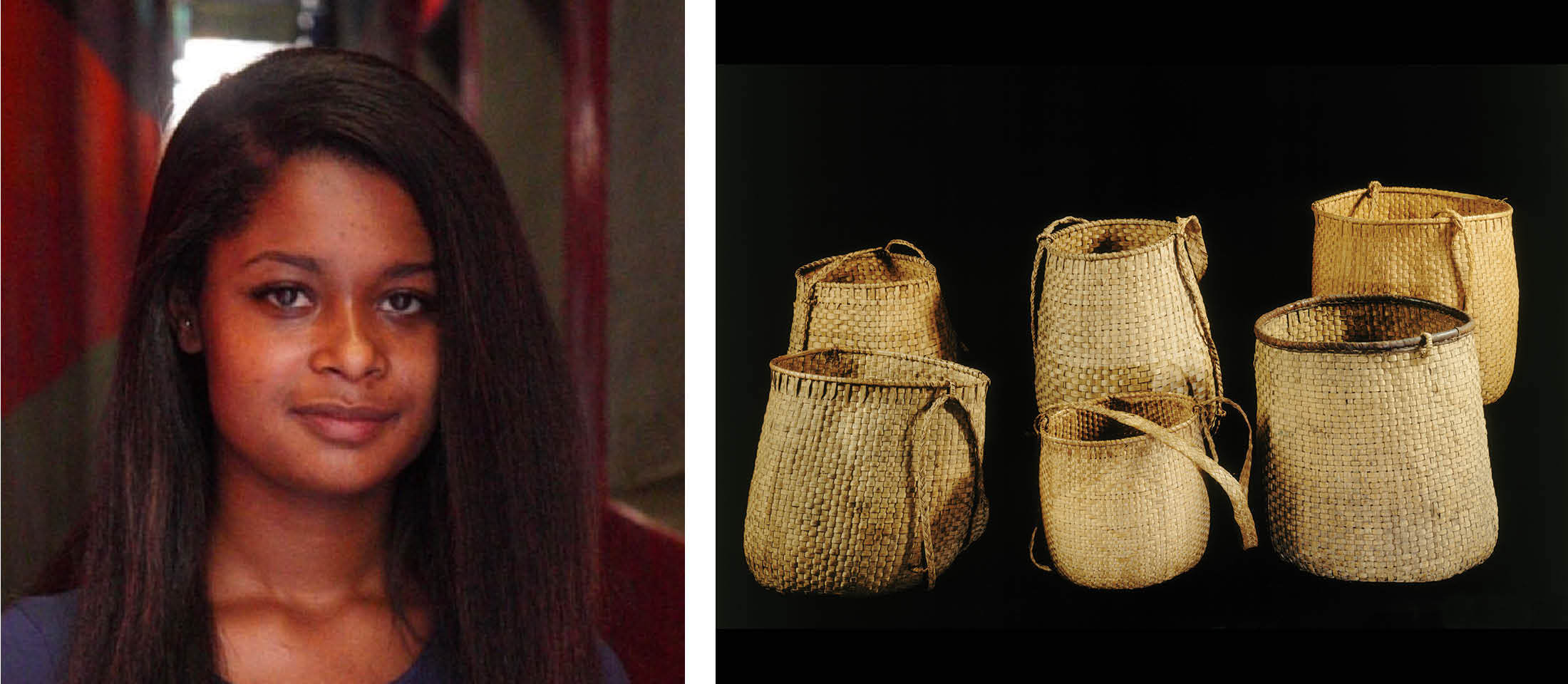
"A woven basket like this...can be used as a purse, but it can also be stored inside a home and act like a dresser or drawer."
Alyssa Harris (Mashpee Wampanoag Tribe)
Listen on YouTube (1:05)
Read the transcript
Alyssa is a historical educator at Plimoth Patuxet. She teaches people all around the world about her native history and culture. She is also one of the youngest proficient speakers in the Wampanoag language, a language that wasn’t spoken for over 150 years because of forced assimilation and intergenerational trauma.
Carrying baskets. Gift of Dr. Lombard C. Jones, 1929. © President and Fellows of Harvard College, Peabody Museum of Archaeology & Ethnology, 29-24-10/98429
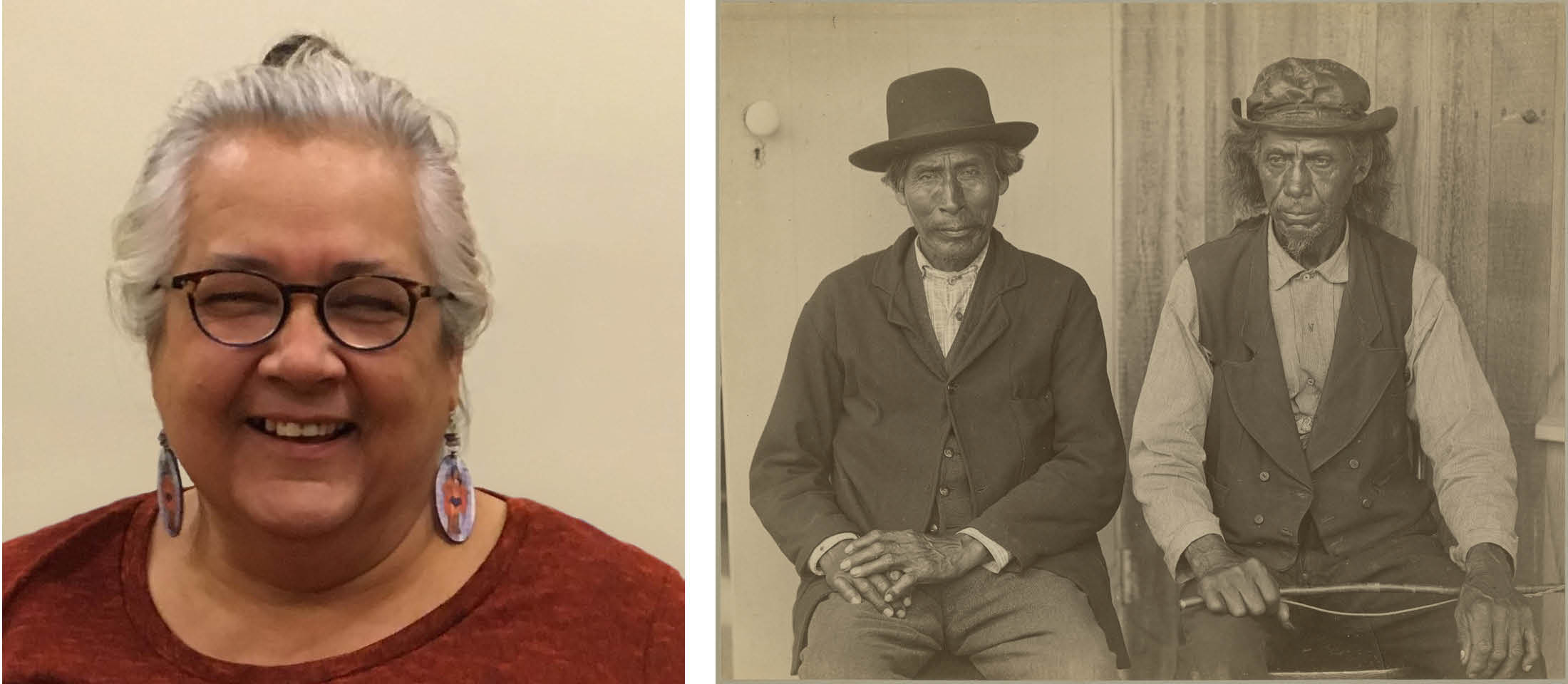
"[Deacon Thomas Jeffers] became a whaler, going out on six voyages and circling the globe twice..."
—Linda Jeffers Coombs, Wampanoag Tribe of Gay Head (Aquinnah)
Listen on YouTube (5:48)
Read the transcript
"I am a member of the Aquinnah Wampanoag tribe on Martha's Vineyard, and have lived in Mashpee for more than forty years. My two grandchildren are enrolled with the Mashpee Wampanoag tribe, as was their father and grandfather.
I have worked for forty-five years as a museum educator, spent eleven years at the Boston Children's Museum, thirty years in the Wampanoag Indigenous Program at Plimoth Plantation, and nine years at the Aquinnah Cultural Center, a small house museum regarding the Aquinnah Wampanoag. I have been an interpreter, an artisan, a researcher, led workshops and teacher institutes, written children's stories and articles on various aspects of Wampanoag history and culture, and developed and worked on all aspects of a wide variety of exhibits."
—Linda Jeffers Coombs, Wampanoag Tribe of Gay Head (Aquinnah)
Photograph of Deacon Thomas Jeffers and Aaron Cooper (left to right). Museum Collection. Courtesy of the Peabody Museum of Archaeology & Ethnology, Harvard University, 2004.1.283.11