


Fragile Memories - Pueblo Pequeño

Honduran liaison to the expeditions, Don Juan Ramón Cueva is pictured here (age 27) next to a stone figure from the Hieroglyphic Stairway that was later shipped to the Peabody Museum. Cueva became mayor and founded the grammar school. PM 2004.24.289

Man with Stela 13 and altar, on the eastern edge of the Copan Valley, PM 2004.24.1899.

Gorgonio López—the Guatemalan gentleman who made moulds at Copan for the Peabody Museum Expedition, PM 2004.24.1747.
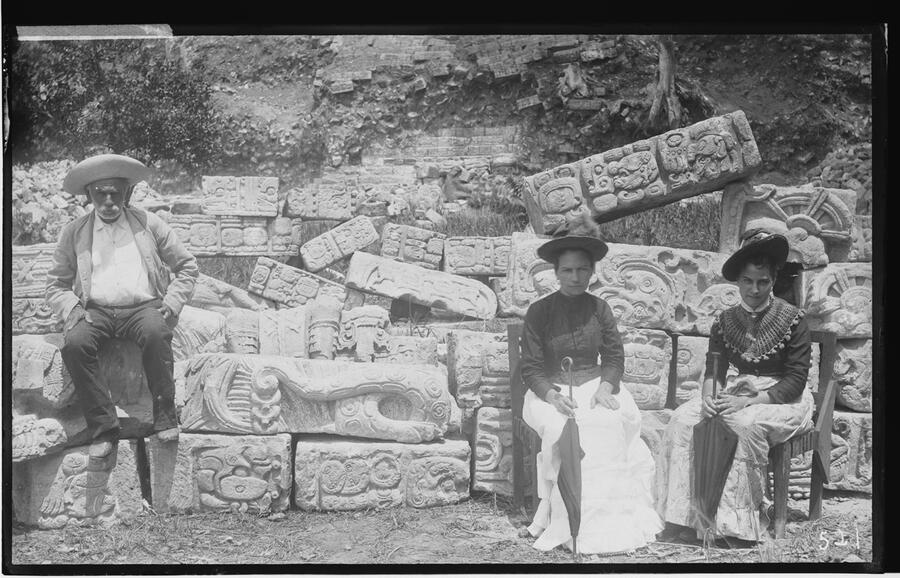
Don Dionicio Urrutia and his two daughters, seated among blocks of the Copan Hieroglyphic Stairway. PM 2004.24.521

It is possible this image portrays a wedding photo with the Hieroglyphic Stairway in the background. PM 2004.24.452

Women with babies, PM 2004.24.442

A young woman and child by a native trapiche and still for sugar cane near Copan village, PM 2004.24.440

Man next to a sculptured head and bust within jaws of an animal, from the Copan Hieroglyphic Stairway, PM 2004.24.431

Don Dionicio Urrutia (twice mayor) with his two daughters, Soledad de la Luz and Clara Engracia. Photo by Edmund Lincoln, 1893. PM 2004.24.303

Man next to Copan Stela 10, in hills west of the Copan village. PM 2004.24.271

Man next to Copan Stela 8, near the village. PM 2004.24.261

Man behind Copan, Stela 7, in the Copan village. PM 2004.24.258
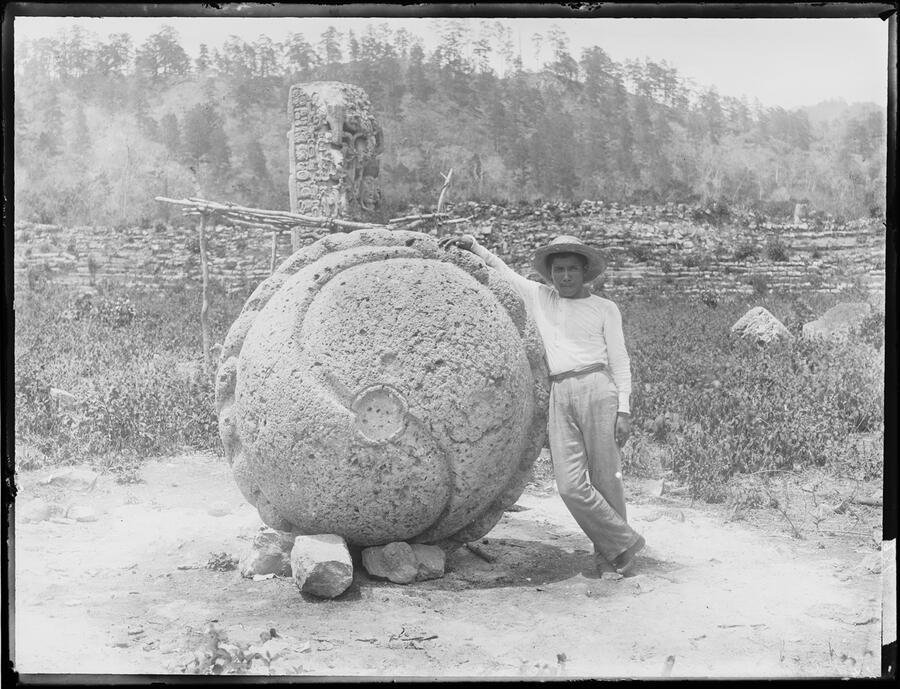
Man next to Copan Altar of Stela 4 on its side in the Great Plaza, PM 2004.24.256

Children flanking Altar U, in Copan village square, photo by Edmund Lincoln 1893. PM 2004.24.249

Northern side of Altar U, in the Copan village square. PM 2004.24.247
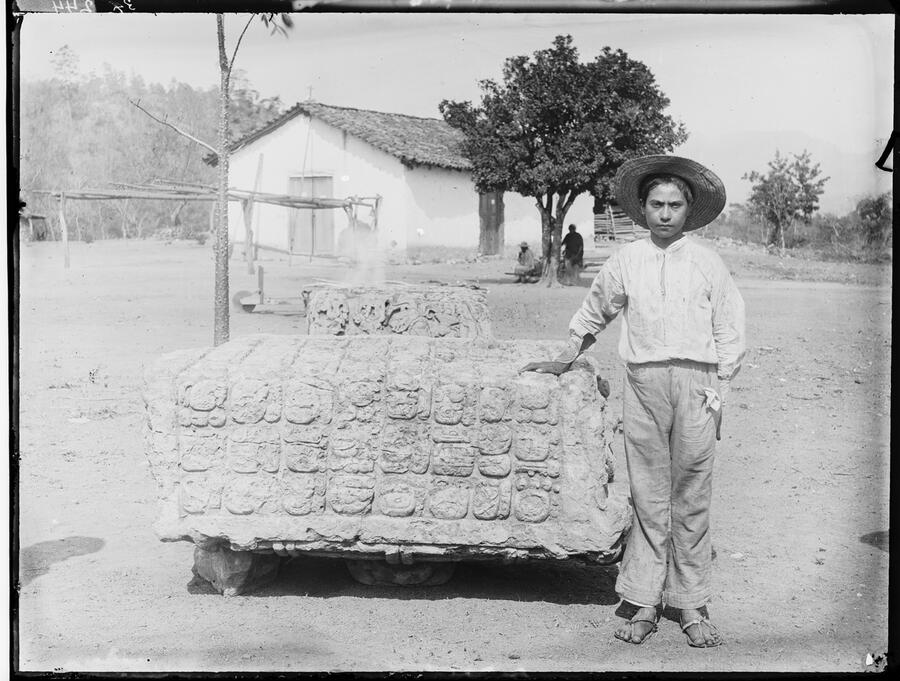
A young man next to Altar U, in the Copan village square, photo by Edmund Lincoln 1893. PM 2004.24.244

Child Seated on Altar S, small hieroglyphic altar, situated at the summit of the large mound next to the church, photo by Edmund Lincoln, 1893. PM 2004.24.242 Image Thumbnail

Here Don Carlos Madrid, a distinguished figure in Honduran politics, stands with a small brigade emphatically planting a Honduran flag next to Stela A, photo by Edmund Lincoln 1893. PM 2004.24.211

It is likely that this photograph records a congregation for the festival of patron saint San José, in front of the early adobe church. In the distance, to the east, we can see the outline of Buena Vista mountain. PM 2004.24.208

Child, woman, and two men in front of a hut. PM 2004.24.206
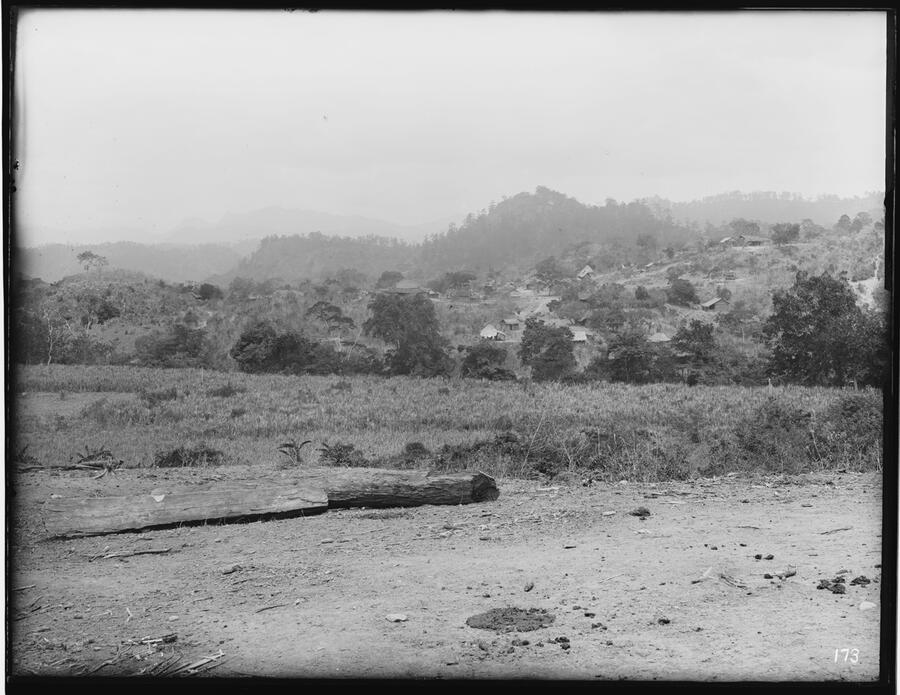
Looking west at Copan Village, 1892-1893. PM 2004.24.173

Local workmen stand with their excavations of a structure near the southeast corner of Mound 36, in the residential zone south of the Copan Acropolis, 1892. PM 2004.24.39

Visiting Dignitaries 1892: Bishop of Comayagua, Monseñor Manuel Francisco Velez; Padre Hernandez; regional governor Guad. Milla, his wife; Don Teodoro Destephan, his wife; Col. López. Hugh Price, the camp manager, is standing on the left. PM 2004.24.27
In 1893, a year and a half after the Peabody’s expeditions to Copan began, the tiny hamlet of thatched-roof houses a kilometer from the main ruins and home to primarily Guatemalan immigrants was incorporated as the Municipality of San José de Copán. Prominent community figures capitalized on the archaeological activity to promote their desire for new civic status.
These photos from that era are thus important today not only as records of now-eroded monuments and the history of 19th-century expeditions but also because of the cultural history simultaneously captured in the background.
For example, one result of the photographers’ efforts to record all the individual monuments in the town plaza is that the village environs can be reconstructed. Unfortunately, although the expedition team members often posed local people to show human scale alongside a monument, they would list the monument but not record the person’s name.
These photographs of the village on the eve of its incorporation as a municipality are treasures of days gone by and a source of great excitement to the descendant families living in Copan today.