


A Good Type - Visual Salvage
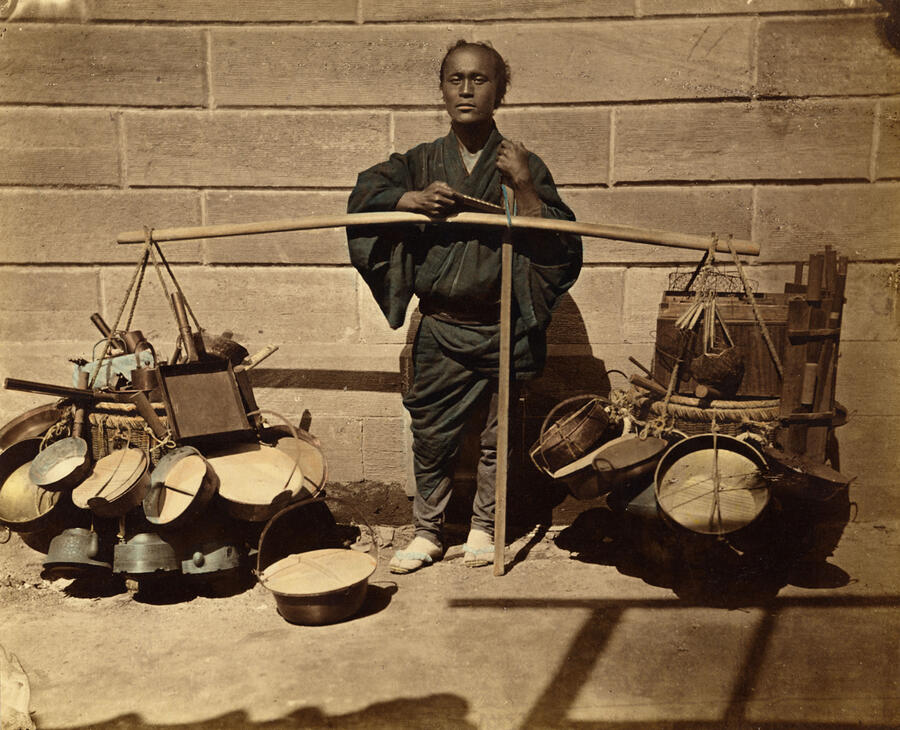
Japan, Stillfried & Andersen imprint, c. 1860s-1870s. This souvenir image of a traveling tinker and pot seller is indistinguishable from an occupational type photo, depicting workers and their tools. 2003.1.2223.337
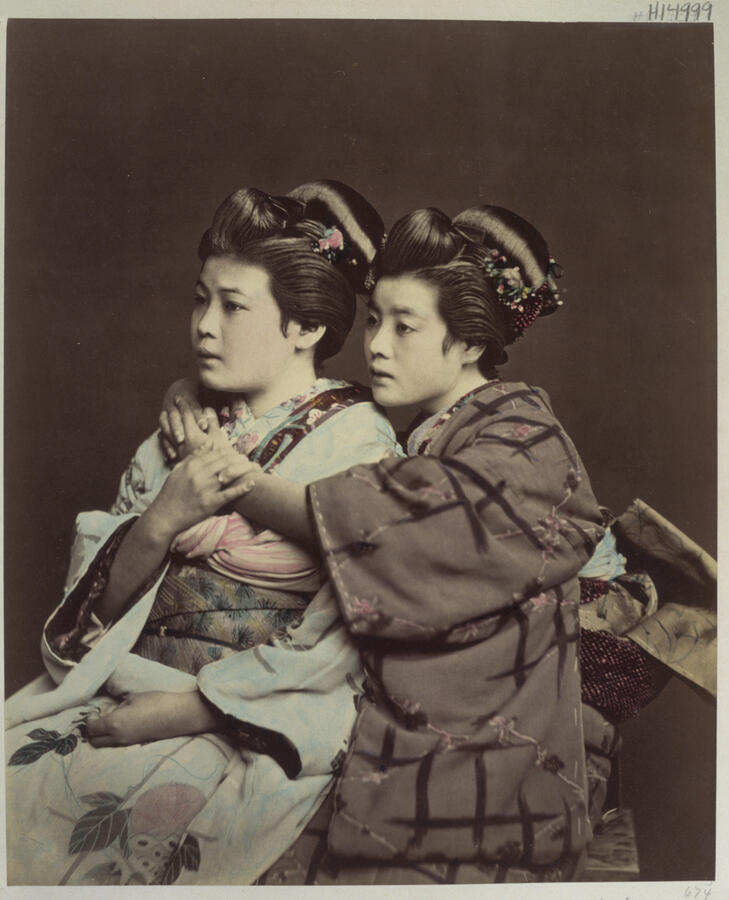
Japan, Raimund von Stillfried, c. 1870s. The image portrays a daughter sitting on her mother's lap and the viewer is presumably expected to notice the hair and dress as "typical." 2003.1.2223.305
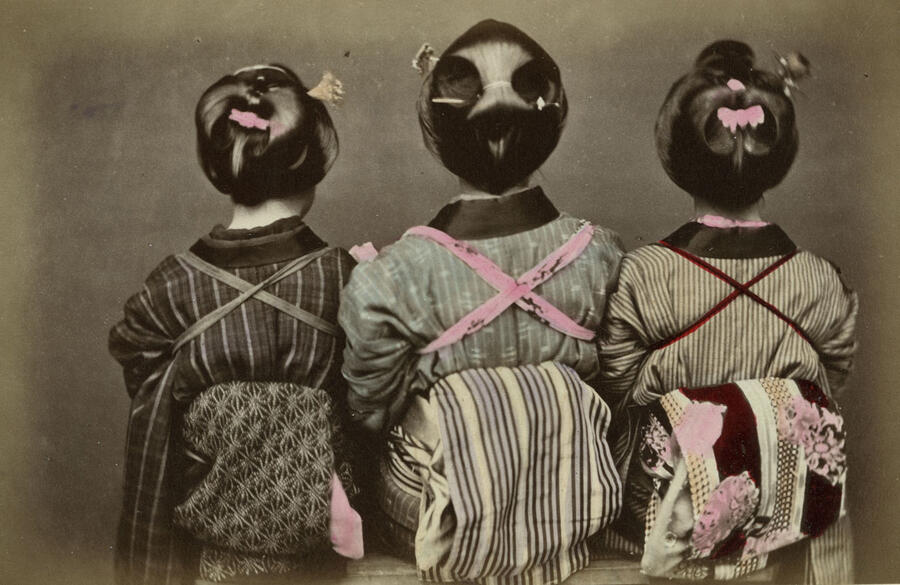
Scenes in Japan, Anon., c. 1880s-1890s. Reverse of photograph features handwritten caption "Showing Japanese Girls' Hair." 36-26-60/15986.111
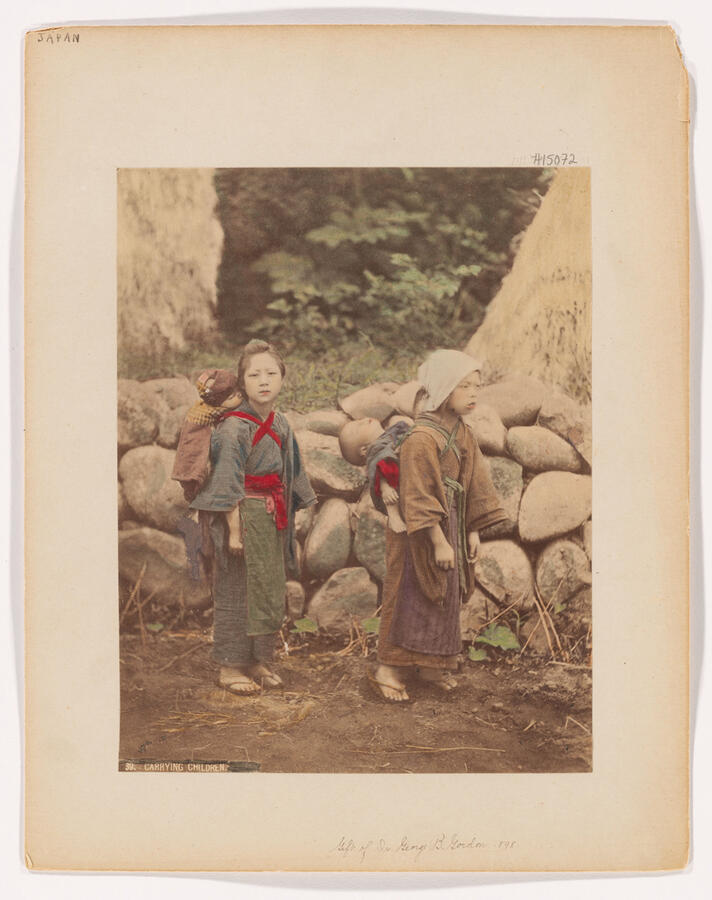
Carrying Children, Adolfo Farsari, c. 1880s. Farsari was a photographer who worked in Yokohama in the 1880s. 2003.1.2223.6
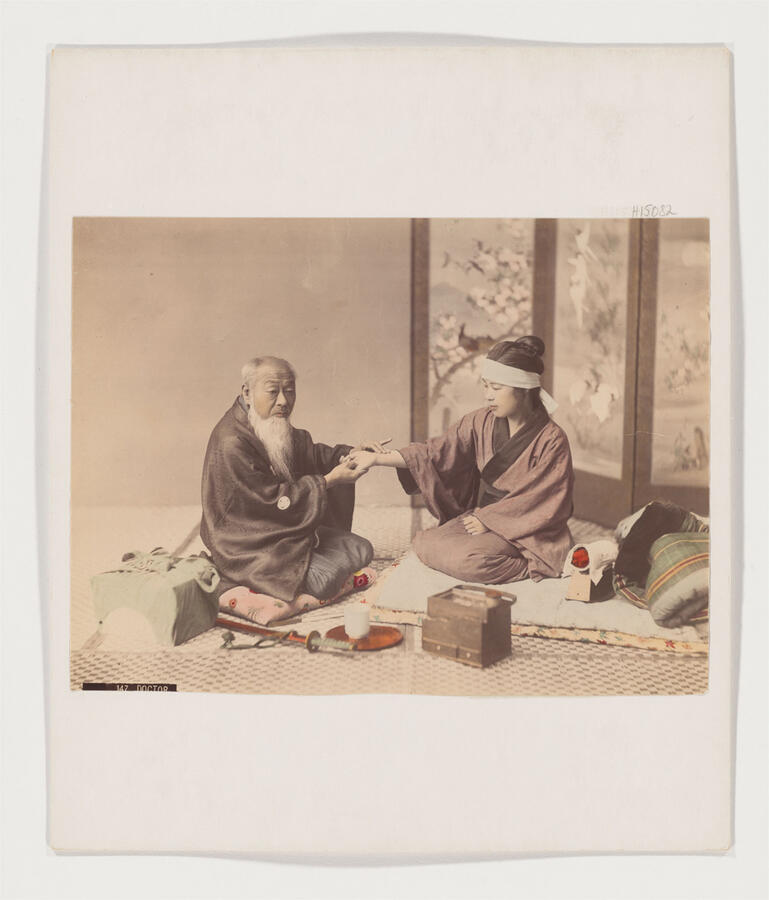
Doctor, Kusakabe Kimbei, c. 1880s-1890s. Kusakabe Kimbei was one of the great commercial photographers of 1880s–1890s Japan. 2003.1.2223.13
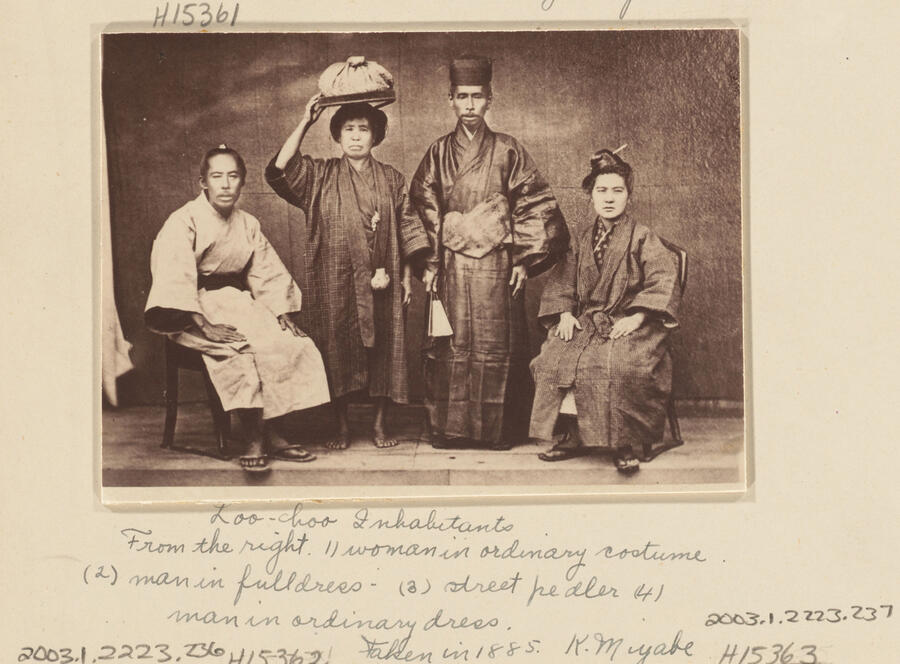
Loo-Choo Inhabitants, Attributed to K. Miyabe, 1885. This rare image portrays one of Japan's Indigenous minorities from Okinawa. 2003.1.2223.235
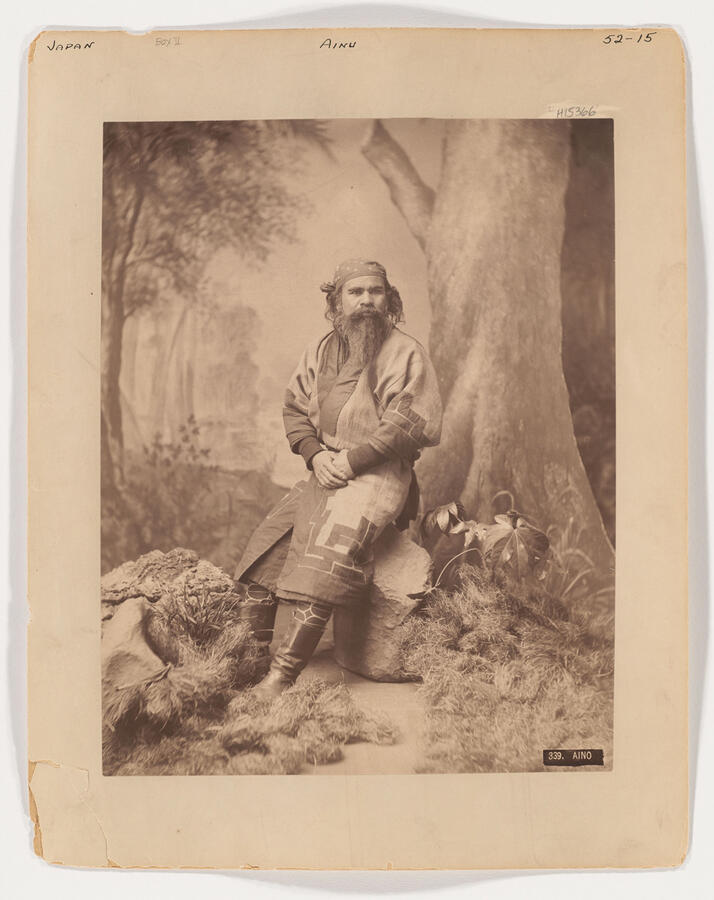
Japan, Ainu / 339. Aino. Anon., c. 1880s-1890s. Portraits of Ainu subjects such as this one were popular among tourists and scientists. 2003.1.2223.329
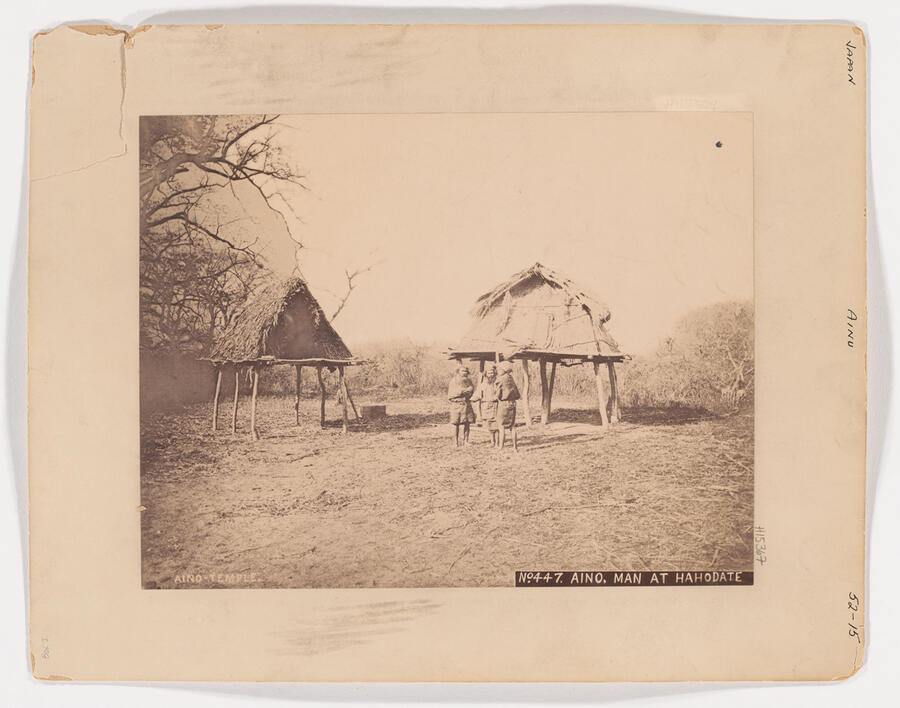
Japan, Ainu / Aino—Temple and No. 447 Aino, Man at Hahodate. Anon., c. 1880s-1890s. Two captions are visible on this photograph, which could indicate one studio’s purchase (or theft) of another’s image, or simply a change of title. 2003.1.2223.240
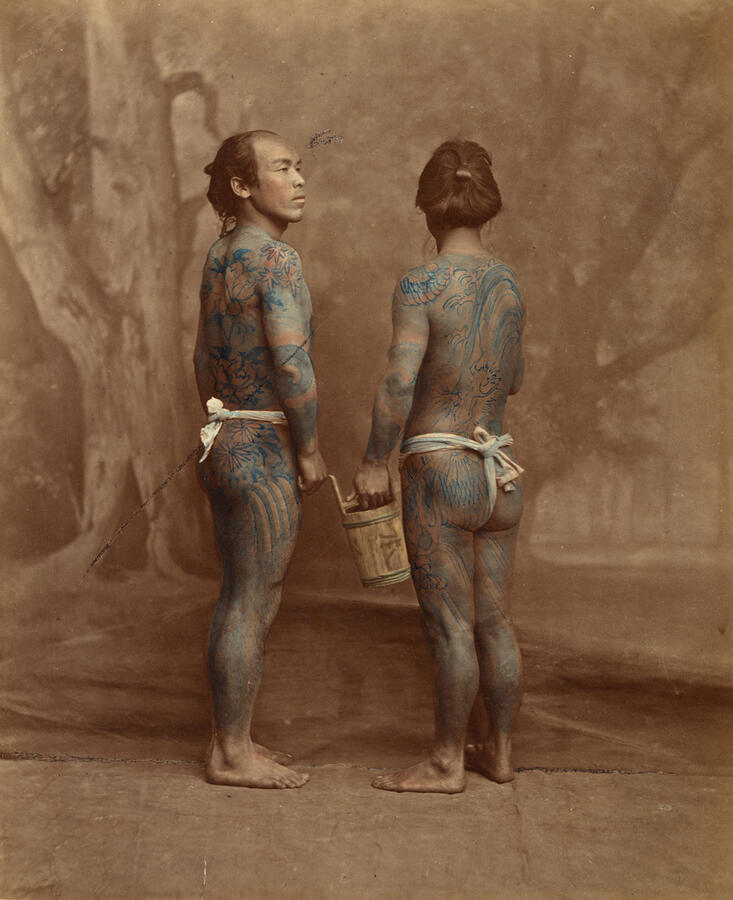
Untitled, Raimund von Stillfried, c. 1870s. Tattoos were officially outlawed in 1872 for Japanese citizens and it is probable that these "tattoos" were added to the photographic print by the artist. 2003.1.2223.355
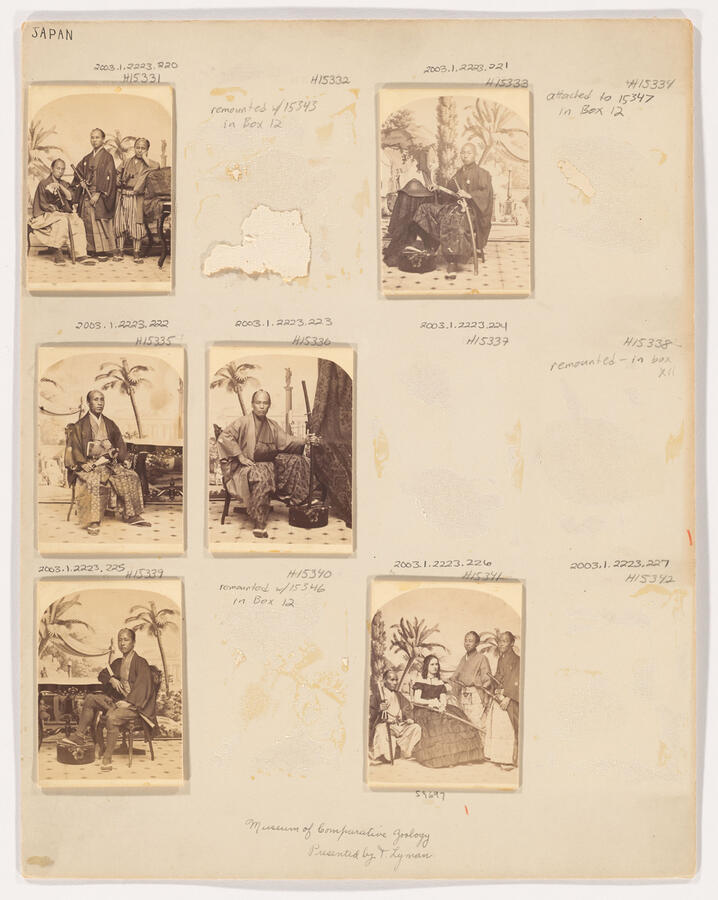
Japan, C.D. Fredericks & Co., 1860. These two halves of stereographs are from an 1860 series featuring members of a Japanese diplomatic mission to the United States. 2003.1.2223.220 through 227
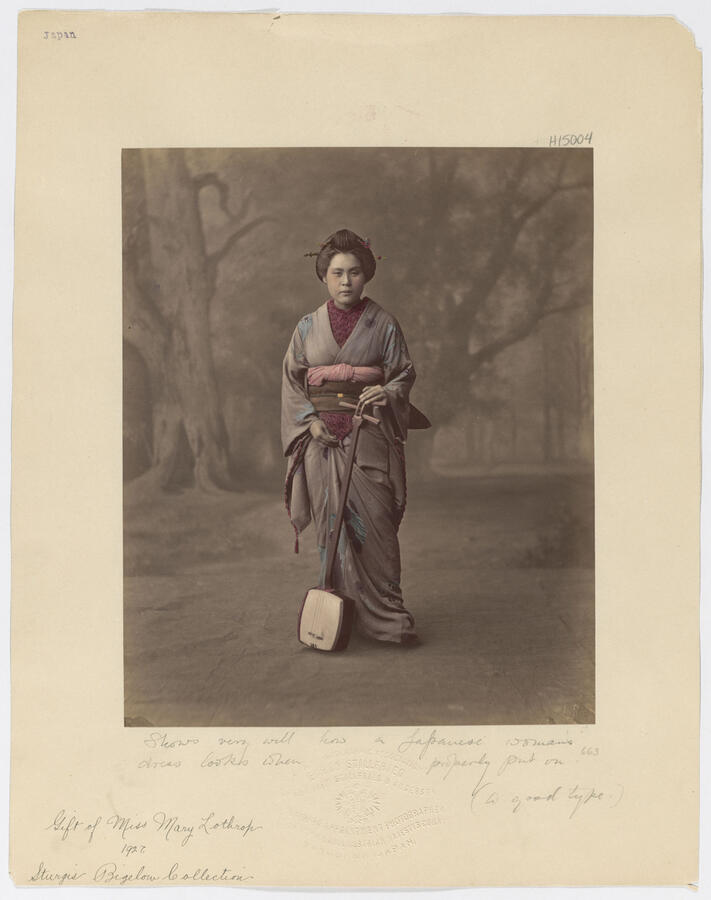
Singing Girl, Japan, Raimund von Stillfried, c. 1870s. "Singing Girl," was a common term for geisha, in a tourist album. The image was archived as an example of typical female dress. 2003.1.2223.310
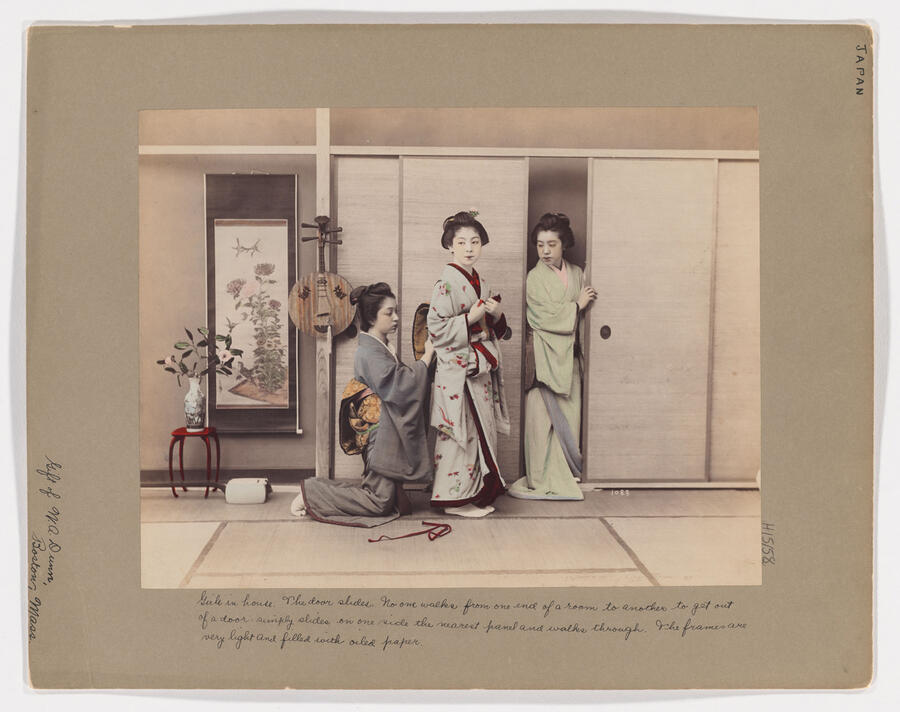
Japan, Anon., c. 1880s-1890s. Captions written on the mat of this photograph encourage viewer to consider domestic architecture rather than the scene of women dressing. 2003.1.2223.68
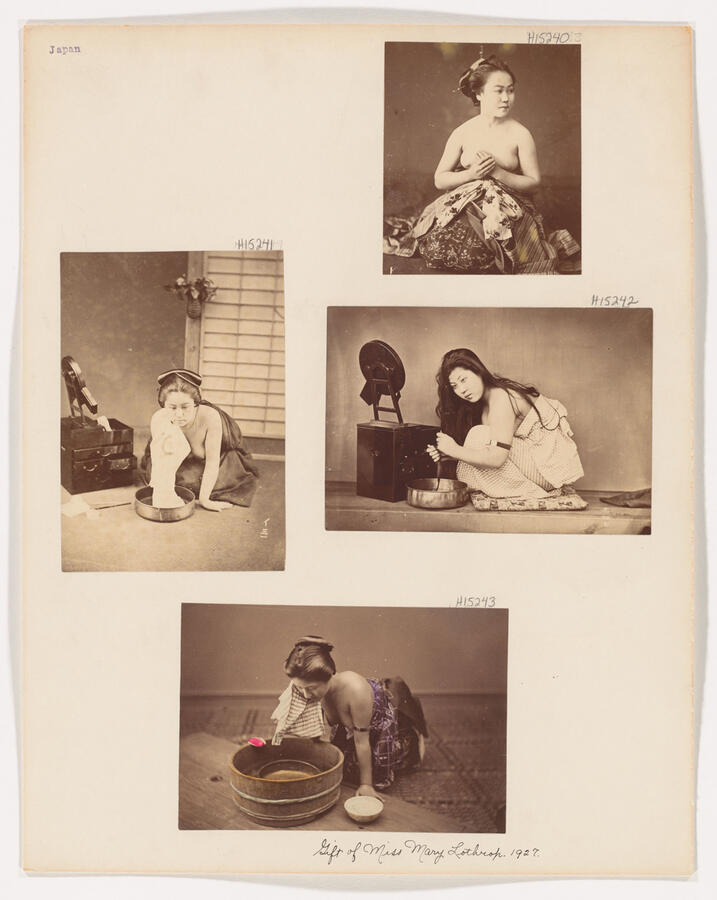
Japan. Raimund von Stillfried, c. 1880s. Popular as erotic souvenirs, these photographs were repurposed as scientific data at the Peabody Museum. 2003.1.2223.137 through 140
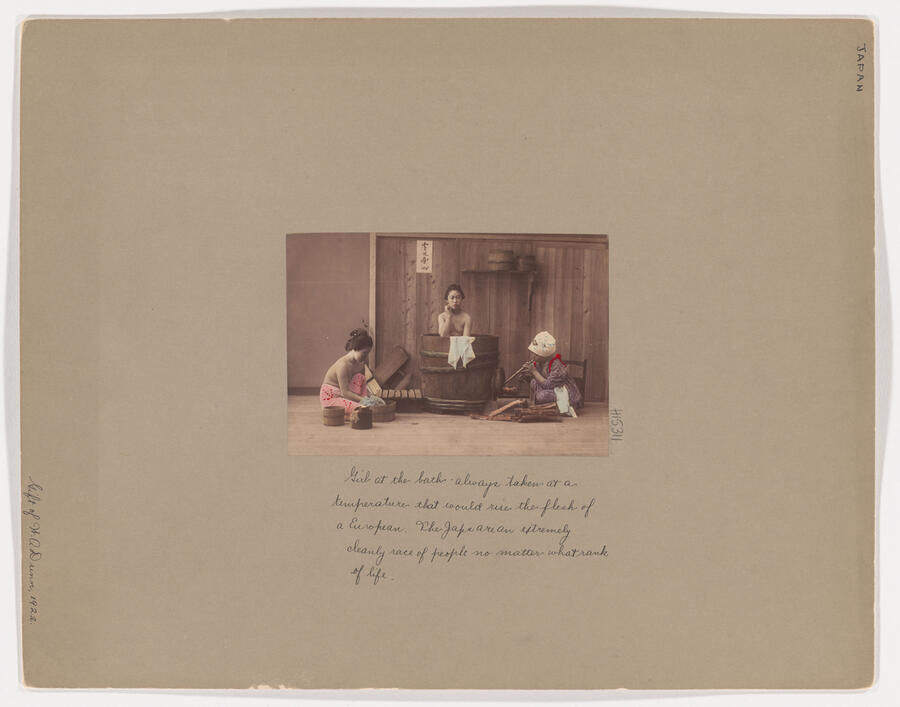
Japan, Anon., c. 1880s-1890s. This photograph's caption reframes an erotically charged image as scientific data by inserting ethnographic information. 2003.1.2223.207
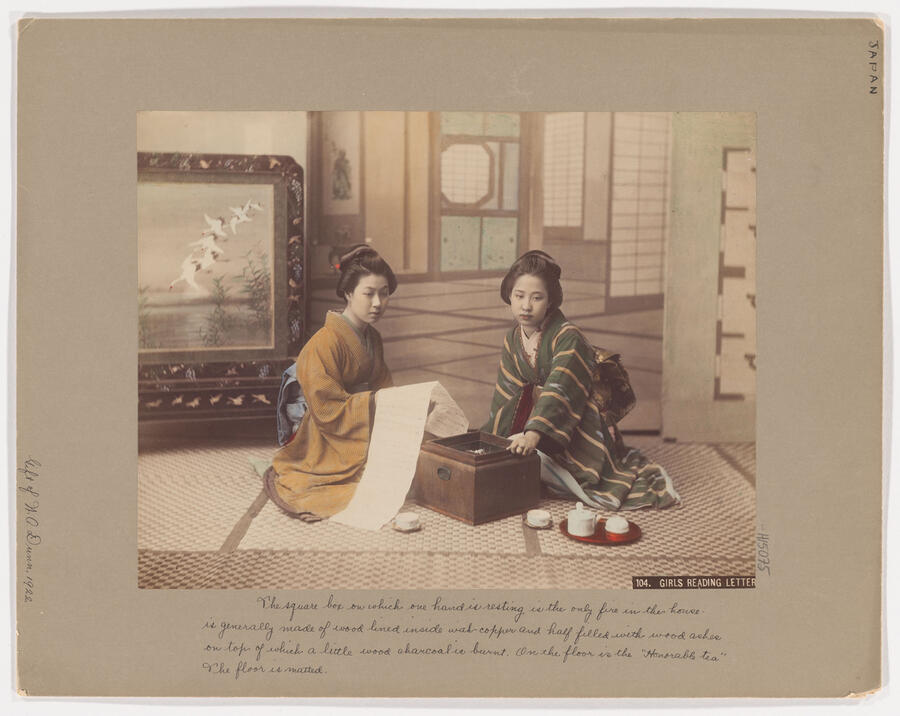
Japan/104/ Girls Reading Letters, K. Kimbei, c. 1880s-1890s. The caption on this photograph changes the understanding of the photograph by emphasizing household heating instead of the obvious activity of reading. 2003.1.2223.373
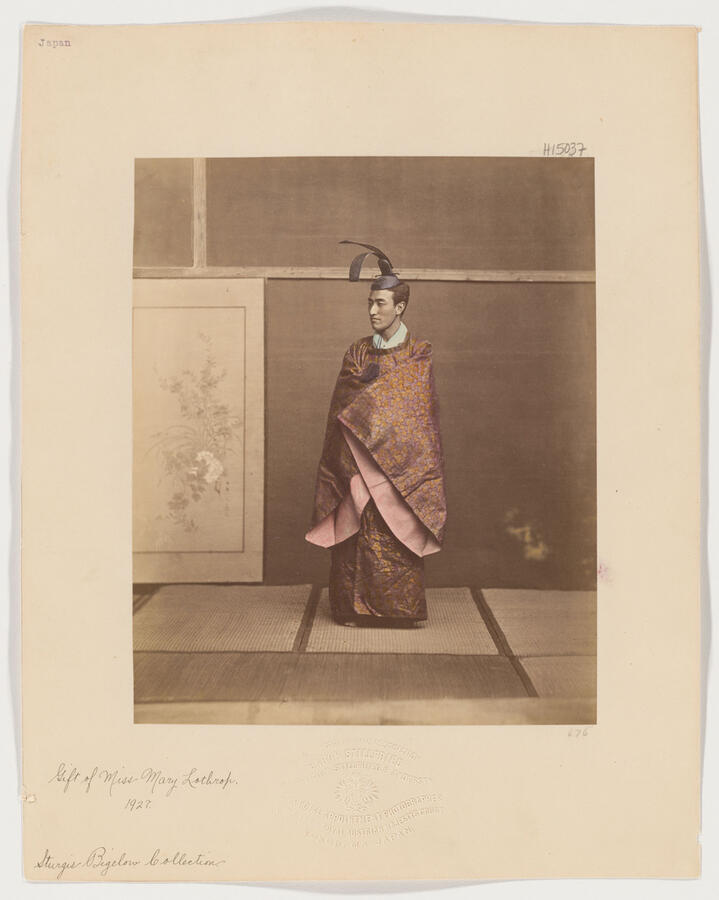
Japan, Raimund von Stillfried, c. 1870s-1880s. Man in imperial court costume. 2003.1.2223.343
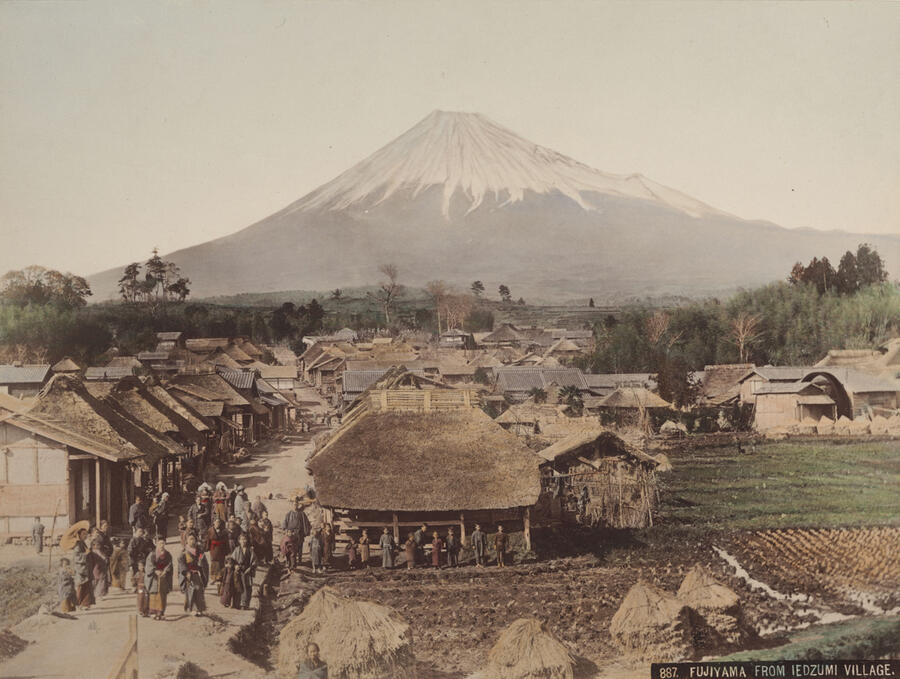
887. Fujiyama from Iedzumi Village, K. Kimbei, c. 1880s. Sacred Mount Fuji was an important subject of Japanese visual representation centuries prior to photography. It was often mistakenly transliterated as "Fujiyama" in captions. 2003.1.2223.261
Japan experienced rapid industrialization during the late-nineteenth and early-twentieth centuries. In the eyes of many observers, this process threatened to destroy the very traditions that captivated Westerners. Photography seemed to offer a way to “salvage” endangered cultural features before they vanished forever.
When donors deposited their photographs of Japan at the Peabody Museum, the institutional context imparted scientific authority to the images, despite their commercial origins. As museum objects, they became “objective” documents of Japanese culture, even though as tourist images, they had been created using models, costumes, staged scenes, and extensive overpainting. Today, we can examine these images in yet another light: as evidence of Western ideas about Japan at a particular historical moment in tourism and anthropology, rather than as snapshots of Japanese culture or scientific specimens.