


Virtual Archaeologist in the Classroom
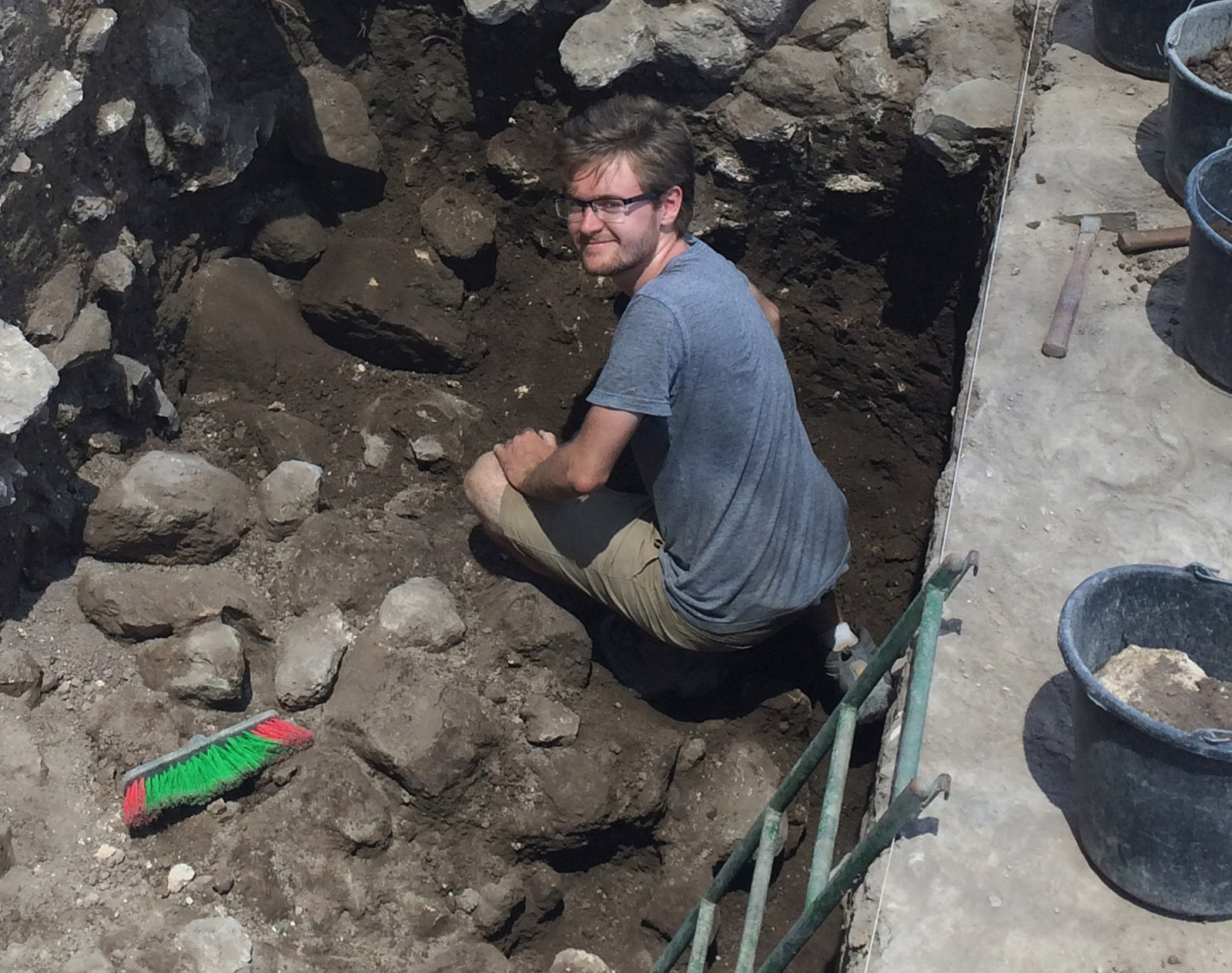
Live Virtual Classroom Visit, Grades 3–12 (30 minutes)
"We've received positive feedback from families about the presentation! He was very easygoing, yet prepared. He was informative, yet spoke in a kid-friendly way. He fielded the questions with ease and positivity. We were very pleased with our experience!”—Teacher, Grades 3–5
"We are doing fiction and non-fiction, and this tied in nicely!...Thank you all for giving our students this experience."—Teacher, Grades 3–5
"We had a visit from an archeology PhD student who had a focus on pyramids in northern Africa. She sent us a video of herself before [the visit] to provide background—she introduced herself, what she was studying, and what she was going to present to us so the kids could build their background knowledge and see a face...My students were extremely engaged – they were full speed ahead into it."—Teacher, Grade 3, Cambridge, MA
Program Description
What is archaeology? Why is it important to know the past and the methods used to interpret it? What questions are answered by archaeology? How do you become an archaeologist?
Invite a Harvard archaeology student to your class to discuss how they study the human past and what they are learning. Each student speaker will share a short video in advance about their work and respond to student questions via Zoom, Teams, or Google Meet. Interview an archaeologist and bring your social studies to life.
Read a Harvard Gazette story about a previous season of this class.
Fee
$30 per session. Payment in full is required one week before the program.
Capacity
10-50 students per session
How to Reserve a Free Virtual Archaeologist in the Classroom
- Select a Harvard student archaeologist presenter
- Request a reservation: complete this form with a choice of dates and times
- The museum contacts the teacher to discuss details
- The museum sends a confirmation email and the video link for student viewing via Zoom, Teams, or Google Meet
- A few days before the program, the teacher calls the Harvard student to introduce themselves
- On the reserved day, the Harvard student responds to the teacher’s video call
Archaeologists
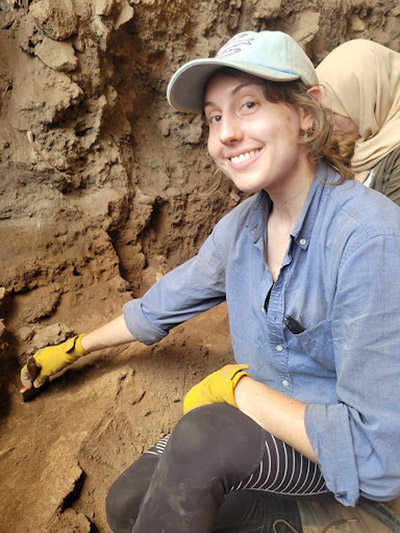
Marlena Billings: Neanderthals - Smarter than we thought (Europe)
Visit our Stone-Age relatives, the Neanderthals, with Marlena. She takes you 50,000 years into the past to explore new evidence that challenges their “brutish and dumb” stereotype. Neanderthals were creative toolmakers, intelligent team players, and skilled artists.

Jack Bishop: The Fertile Crescent (Ancient Near East)
What can the remains of sheep, cattle, wild deer, and other animals in the Fertile Crescent tell us about the ways people lived during the birth of agriculture? Jack brings your class into the lab and demonstrates a scientific technique called ZooMS (Zoology by Mass Spectrometry) to show how collagen, a protein found in all animals, can unlock the connections between animals, climate, and people.
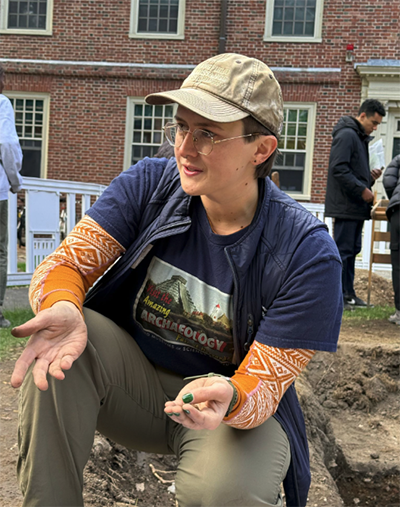
Emily Conlogue: Catastrophe on a Colonial College Campus (USA)
Discover how old trash becomes tangible history. Emily explains how archaeology in Cambridge, Massachusetts reveals details about colonial college student life in the 1700s: the food they ate, life outside of class and the rules they broke. She shares how contemporary Harvard students revealed the impacts of a dramatic 1764 fire that destroyed the Colony’s largest collection of books and scientific equipment. Ultimately, the fire helped Harvard become the place it is today.
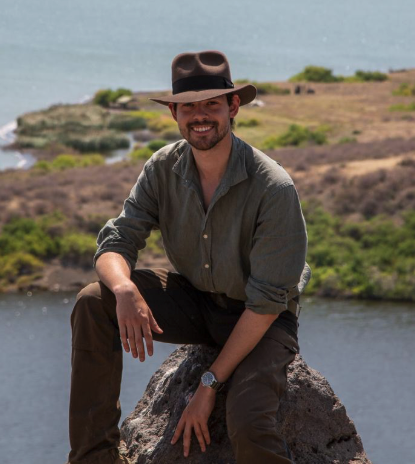
Dylan Flicker: Flintknapping the First Tools
Discover flintknapping, one of the earliest-known technologies, which appeared millions of years ago. Dylan explains and demonstrates how our ancient ancestors developed sophisticated techniques for chipping stones into sharp-edged tools for slicing, scraping, hunting, and other necessary survival skills.
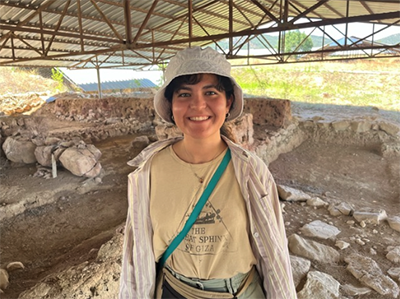
Gökçe Öztürk: Origins of Dairy (Turkey)
As people developed the first semi-permanent settlements, they domesticated sheep, goats, and cattle. Trace the origins of dairy farming 10,000 years ago during the New Stone-Age with Gökçe. She analyzes food remains on ancient teeth, bones, and pottery from Anatolia (modern-day Turkey) to understand how the techniques of cheese making and milk use began. Gökçe illustrates how this led to the development of settled societies, and eventually to permanent cities.
Note
Harvard student videos to be screened before the live virtual discussion vary in length from five to twelve minutes. As graduate students receive payment for their time, we would appreciate feedback after the session via an online survey we will send to you.
About the Harvard Student Archaeologists
These students model curiosity, approachability, and enthusiasm for archaeology topics and careers. All have worked with the public at annual Amazing Archaeology at Harvard fairs and enjoy meeting families and others to talk about their work. Most teach sections of archaeology classes to college students and many have been interested in archaeology since elementary school. Most have undergraduate coursework or degrees in anthropology, and most are advanced in their graduate studies with several seasons of fieldwork experience. Typically, an archaeology student spends 5–7 years (post BA) getting their doctorate.
Benefit for Harvard Students
Speaking to your students is also an opportunity for Harvard students. Many teach college classes using college-level language. But in the field, to the media, and in grant proposals, they need to use everyday language to explain what they are trying to learn, how they will undertake their work, and how it may help the community at the research site. Developing these professional skills with your students improves their own career prospects.
About Archaeology
Archaeology is the scientific study of human cultures, based on their material remains. It is both a process that follows the scientific method and a source for knowledge. Like linguistics, biological anthropology, and cultural anthropology, archaeology is a subdiscipline of anthropology, which is the comparative study of humankind and human behavior.
Harvard has two museums devoted to archaeology: The Peabody Museum of Archaeology & Ethnology and the Harvard Museum of the Ancient Near East. Founded in 1866, the Peabody Museum is of the oldest and largest museums in the world focusing on anthropological material from the Americas. The Harvard Museum of the Ancient Near East erected in 1903 holds collections from Jordan, Iraq, Egypt, Cyprus, Israel, and Tunisia. Harvard students may use the collections in both museums for their own research.